
Help on a Singer 96-60 Industrial
Subscribe
#11

 09-10-2025
Quote:
The ways they differ from a domestic become obvious when you switch the motor on. If that doesn't frighten you, push the pedal to the metal and get out of the way! I've had three model 96 (still own two, 96k41s) and they're awesome machines. I added a basic roller foot and now can sew upholstery (either leather or vinyl). They take common 20U bobbins and 16x231 industrial needles (available up to size 24!!). Originally Posted by miriam
The tension and a bobbin are going to be very simple and adjust like a home machine with that same style part. They thread about the same as a home sewing machine, too.
Considering all of that, I bought mine with its beautiful table and amazing motor for $50 after it had been re-listed several times on ebay. I felt sorry for the seller.
Just don't understand why they aren't more popular.
#12

Quote:
Considering all of that, I bought mine with its beautiful table and amazing motor for $50 after it had been re-listed several times on ebay. I felt sorry for the seller.
Just don't understand why they aren't more popular.
$50, that's a fine piece of luck there! Aren't those tables scrumptious? No, the motor and speed don't frighten me. I was taught how to sew on my mother's industrial. Where did you purchase your roller foot?Originally Posted by manicmike
The ways they differ from a domestic become obvious when you switch the motor on. If that doesn't frighten you, push the pedal to the metal and get out of the way! I've had three model 96 (still own two, 96k41s) and they're awesome machines. I added a basic roller foot and now can sew upholstery (either leather or vinyl). They take common 20U bobbins and 16x231 industrial needles (available up to size 24!!). Considering all of that, I bought mine with its beautiful table and amazing motor for $50 after it had been re-listed several times on ebay. I felt sorry for the seller.
Just don't understand why they aren't more popular.
#13

ThayerRags , 12-09-2014 09:09 AM
Super Member
What do you plan on sewing with your 96-60, or should I say, what are you going to use it for primarily?
I’ve been puttering with making a darning machine out of my 1936 Singer 96-40. I bought the machine head, motor/clutch assembly, and wooden top for $.99 on that auction site back in 2009. A seller in Phoenix wanted to keep just the power stand for some other use and sold the rest. My son was attending school there and picked it up for me. I plan to put the head into an industrial treadle stand that I have.
I tried a roller foot on it, but I couldn’t ever get it to work without risking damage to the thread guide on the needle bar. I have a Singer 31-15 with a roller foot setup on it, so I turned my attention to FMQ for the 96-40. I removed the feed dog and put a blank darning needle plate on the 96, and the wife and I did a little FMQ on it using a small electric motor for power, a shank adaptor, and a regular hopping foot, but the foot kept breaking. Then the project stalled waiting for a better darning foot and a pitman coupling nut for the treadle linkage of the stand. I haven’t gotten any further on my project, but would like to get back into it. Industrials take up so much space that some of my “experiments” like this have to be disassembled and put into storage between active times.
CD in Oklahoma
I’ve been puttering with making a darning machine out of my 1936 Singer 96-40. I bought the machine head, motor/clutch assembly, and wooden top for $.99 on that auction site back in 2009. A seller in Phoenix wanted to keep just the power stand for some other use and sold the rest. My son was attending school there and picked it up for me. I plan to put the head into an industrial treadle stand that I have.
I tried a roller foot on it, but I couldn’t ever get it to work without risking damage to the thread guide on the needle bar. I have a Singer 31-15 with a roller foot setup on it, so I turned my attention to FMQ for the 96-40. I removed the feed dog and put a blank darning needle plate on the 96, and the wife and I did a little FMQ on it using a small electric motor for power, a shank adaptor, and a regular hopping foot, but the foot kept breaking. Then the project stalled waiting for a better darning foot and a pitman coupling nut for the treadle linkage of the stand. I haven’t gotten any further on my project, but would like to get back into it. Industrials take up so much space that some of my “experiments” like this have to be disassembled and put into storage between active times.
CD in Oklahoma
#14
I'm plan on making bags using mainly upholstery fabric and some very light weight leather trim. I will also be making horse blankets and other tack related items. I'm picking up a 31-15 tomorrow that's in dire straights and the table is dismal, I can't wait to practice and hone my "tinkering" skills on it. I don't know if I'll get to do that before the end of the year since I haven't purchased my yet tools.
I wonder if you can modify a Janome P2 foot to work for FMQ on your Singer 96 like this gentleman did on his Singer 31-15:
https://www.youtube.com/watch?v=MNUkMBT54lc
I wonder if you can modify a Janome P2 foot to work for FMQ on your Singer 96 like this gentleman did on his Singer 31-15:
https://www.youtube.com/watch?v=MNUkMBT54lc
#15
Quote:
Originally Posted by miriam
The tension and a bobbin are going to be very simple and adjust like a home machine with that same style part. They thread about the same as a home sewing machine, too.
LOL, I like your signature saying. I try to approach my sewing machines as if I had all the time in the world!
#16
ThayerRags , 12-09-2014 11:14 AM
Super Member
Quote:
I would think that it would be handy to have a roller foot for those types of sewing projects. Maybe manicmike can help you get a roller on your machine if you have problems. I’m not sure why one didn’t work on my machine, unless the thread guide is not the original or something. There just wasn’t enough space between the roller and the thread guide on mine, even when I had the roller wheel adjusted to ride on just the outer half of the feed dog.Originally Posted by Alawai
I'm plan on making bags using mainly upholstery fabric and some very light weight leather trim. I will also be making horse blankets and other tack related items. ....
CD in Oklahoma

#18
Quote:
Local sewing shop, who mainly deal with industrial machines.Originally Posted by Alawai
Where did you purchase your roller foot?
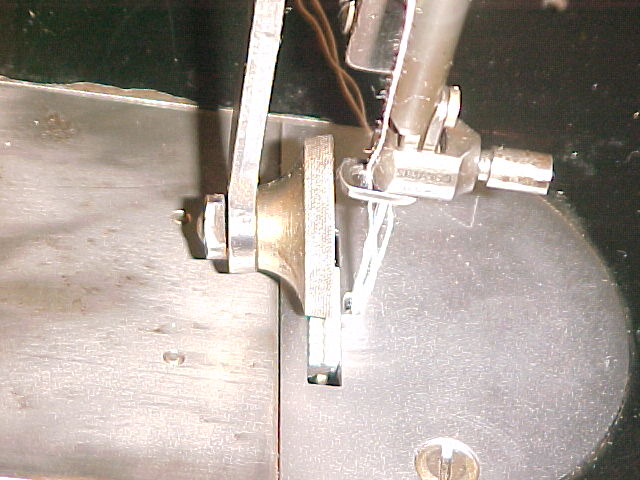
CD, I think mine is missing that thread guide (or my sub model didn't have it there, perhaps).
[ATTACH=CONFIG]501971[/ATTACH]

#19
ThayerRags , 12-09-2014 02:25 PM
Super Member
I think yours originally had one. It looks like the screw is still there to mount it (the needle clamp screw goes through a large hole in the guide without touching the guide). Someone must have removed it at some point, because usually if they’re broken, the shank is still mounted to the needle bar. It’s not any big deal. Most machines will continue to work just fine without having that lowest thread guide. My wife broke the bottom thread guide off of her Singer 301 about a year ago, and although I have another one, I haven’t gotten it put on yet.
CD in Oklahoma
CD in Oklahoma
#20
Quote:
Agreed, CD. Originally Posted by ThayerRags
I think yours originally had one.
I've had three of these machines so far and none has had that final thread guide. I'm concluding that they're pretty easy to break
 (unusual for a 1940s Singer industrial).
As you observed, its absence hasn't caused any problems
